

Blog / Toyota Financing

Down Payment on a Car: How Much Should You Put Down?

Toyota Down Payment on Car

Buying a car is one of the biggest financial decisions most people will ever make, and the down payment is one of the first real choices you'll face. Get it right and you set yourself up for manageable monthly payments and a loan that actually works in your favor. Get it wrong and you could end up underwater on a vehicle before your first oil change.

This guide gives Palatine-area shoppers a practical framework for thinking through that decision. Keep in mind this is general educational content, not personalized financial advice. Your specific situation may differ, and speaking with a finance specialist is the best way to find the right approach for you.

What Is a Down Payment on a Car (and Why Does It Matter)?

A down payment is the upfront cash you pay toward the purchase price before financing kicks in. It's not just a formality. What a down payment actually does reveals why lenders care about it so much: it directly reduces the amount you need to borrow, which affects everything from your monthly payment to your interest rate.

Say you're buying a $35,000 vehicle and you put $7,000 down. You're now financing $28,000 instead of the full price. That smaller loan balance means lower monthly payments and less total interest paid over the life of the loan. It also signals to lenders that you're a lower-risk borrower, which can open the door to better financing terms.

There's another reason a solid down payment matters: depreciation. New vehicles typically lose around 20% of their value in year one alone, according to industry data. Without enough money down, your loan balance can easily exceed what the car is actually worth, a situation known as negative equity or being "upside down" on your loan. A meaningful down payment creates a financial cushion that protects you from that.

What's the Average Car Down Payment and Should You Match It?

Based on Q1 2026 automotive finance data, the average new car down payment sits at roughly $6,200, representing about 13-15% of the vehicle price. Industry benchmarks recommend 15-20% for new vehicles and 10-15% for used ones. These guidelines exist to keep monthly payments manageable, reduce interest exposure, and help buyers avoid negative equity.

To see how down payment size affects real loan costs, here's an illustrative comparison using a $40,000 vehicle at approximately 6.9% APR on a 60-month term. These are estimates for planning purposes only and are not guaranteed quotes:

Down PaymentAmount FinancedMonthly Payment (est.)Total Interest (est.)
10% ($4,000)$36,000~$708~$6,466
15% ($6,000)$34,000~$668~$6,106
20% ($8,000)$32,000~$629~$5,747

Moving from 10% to 20% down on that vehicle saves roughly $720 in total interest and cuts the monthly payment by about $79. Over five years, those numbers add up in a real way.

That said, matching the average isn't a universal rule. Someone with excellent credit and a healthy savings cushion might comfortably put down less. Someone with a lower credit score or tighter cash flow might benefit from stretching to put more down. If you'd like to explore what financing could look like for your situation, Arlington Toyota's finance center is a good place to start.

The Real Factors That Shape Your Down Payment Decision

Several real-world factors influence how much you should put down. Understanding each one helps you make a choice you won't regret later.

Your Credit Score and Loan Terms

Your credit score is one of the most powerful levers in the car financing equation. Prime borrowers (credit scores 661-780) currently see APRs of around 6.27% on new vehicles, based on Q4 2025 Experian data, while the overall new-vehicle average APR reached 6.9% in Q1 2026. Some credit unions, such as Connexus Credit Union, have offered rates as low as approximately 4.89% APR as of April 2026. A weaker credit score can result in higher rates and stricter loan conditions, which makes the size of your down payment far more consequential.

A larger down payment reduces the loan-to-value ratio, which lowers the lender's risk. That can make lenders more willing to extend better terms, especially if your credit history has some rough patches. If your score isn't where you'd like it to be, putting more money down upfront can partially offset that disadvantage.

Your Monthly Budget and Debt-to-Income Ratio

Before settling on a down payment amount, take an honest look at your monthly obligations. Standard lender guidance suggests keeping your car payment to a manageable share of your take-home pay and total debt obligations below a comfortable threshold of your gross income. For context, Palatine, IL households carry a median income of approximately $97,819, which translates to a suggested car payment ceiling of roughly $700-$800 per month for a typical buyer, though individual circumstances vary widely.

Just because you're approved for a large loan with minimal money down doesn't mean it's the right move. A larger down payment reduces that monthly figure, which can mean the difference between a payment that's manageable and one that creates constant stress. Don't drain your savings entirely to make it happen, though. Keeping an emergency fund intact matters more than maximizing your down payment.

Loan Term Length and Vehicle Depreciation

Longer loan terms spread payments out and make each one smaller, but you pay more total interest over time. With a 72-84 month term, there's also a real risk of owing more than the car is worth for an extended stretch, especially on a new vehicle depreciating roughly 20% in year one. A larger down payment can counteract this by giving you immediate equity and keeping you above water from the start.

New Car vs. Used Car: Does the Down Payment Advice Change?

The guidance shifts depending on whether you're buying new or used, and it comes down to depreciation timing. Here's a quick reference by vehicle type:

Vehicle TypeRecommended Down PaymentKey Reason
New Car15-20%Fast depreciation; protects equity
Used Car10-15%Lower price point; slower depreciation
Certified Pre-Owned10-15%Predictable value; warranty coverage
Leased VehicleLittle to none recommendedEquity risk if vehicle is totaled or returned early

New cars lose value quickly in the early years, which is why the recommended percentage runs higher. That larger upfront investment helps ensure your loan balance doesn't outpace the car's declining value. For used vehicles, the steepest part of the depreciation curve has already passed, so the risk of going underwater is lower.

One thing worth noting for Chicagoland buyers: popular trucks and SUVs carry higher sticker prices. At 15-20%, you're looking at a larger absolute dollar amount compared to a sedan, so factoring that into your savings timeline well in advance is smart.

Certified Pre-Owned vehicles occupy an interesting middle ground. Toyota Gold Certified Pre-Owned vehicles come backed by a 160-point inspection, a 12-month/12,000-mile limited comprehensive warranty, a 7-year/100,000-mile limited powertrain warranty, and 7-year/100,000-mile 24-hour roadside assistance. That coverage gives buyers real confidence when deciding how much to put down.

If you're ready to explore what financing looks like for a specific vehicle, you can apply for financing online before visiting the dealership.

Should You Put Down More or Keep Cash in Your Pocket?

The case for a large down payment is compelling. You'll borrow less, pay less in interest, reduce your monthly obligation, and build equity faster. But there are real drawbacks to putting down more than you need to.

The biggest one is liquidity. Tying up most of your available cash in a down payment can leave you exposed when an unexpected expense comes along. Car repairs, medical bills, a job disruption, any of these can create serious financial pressure, and depleted savings make those situations much harder to handle.

Lower down payments are possible and common, but the real costs deserve honesty. Higher monthly payments, more total interest paid over the loan term, and the risk of negative equity are genuine trade-offs, especially on longer 72-84 month loans paired with a new vehicle that depreciates sharply in year one.

The smarter play is usually to hit the recommended percentage, keep your savings intact, and then evaluate whether any remaining funds can reasonably go toward the purchase without compromising your financial cushion.

How to Build Your Down Payment (Including Using a Trade-In)

The most straightforward path is consistent saving over time, setting aside a specific amount each month in a dedicated account earmarked for your purchase. Tax refunds and work bonuses are excellent opportunities to accelerate that progress without disrupting your regular budget.

Trade-In Tip: If you currently own a vehicle, its trade-in value works like a down payment. It reduces the amount financed, which lowers both your monthly payment and the total interest you'll pay over the loan. It's not cash in hand, but it functions exactly the same way by shrinking the loan principal. At Arlington Toyota, we evaluate your current vehicle on-site, apply the trade-in value directly toward your purchase, and adjust the financing accordingly. It's one of the most practical ways to transition from one vehicle to the next without saving an entirely fresh down payment from scratch.

If you're still working out the numbers, running different down payment scenarios before you visit the dealership gives you a much clearer picture of what your options actually look like.

Ready to Figure Out Your Down Payment?

Working Through the Numbers Together

Understanding how car down payments work is genuinely useful. Applying that knowledge to your specific situation, your credit, your budget, your vehicle preference, is where things get personal.

We've been serving Palatine, IL and greater Chicagoland for decades, located at 2095 N Rand Rd off IL-53. Our finance team works with buyers across a wide range of financial situations, helping them figure out the right down payment strategy alongside the right vehicle. Whether you're looking at a new Toyota, a Certified Pre-Owned model, or a used car, truck, or SUV from our inventory, we can walk you through your options clearly and without pressure.

Take the Next Step

Reach our sales team at (844) 474-5287, Monday through Friday from 9 AM to 8 PM or Saturday from 9 AM to 6 PM. You can also explore your financing options anytime through Arlington Toyota's finance center. Getting the right number down from the start sets the tone for your entire ownership experience, and it's worth taking the time to do it right.
Posted in:

Recommended Posts

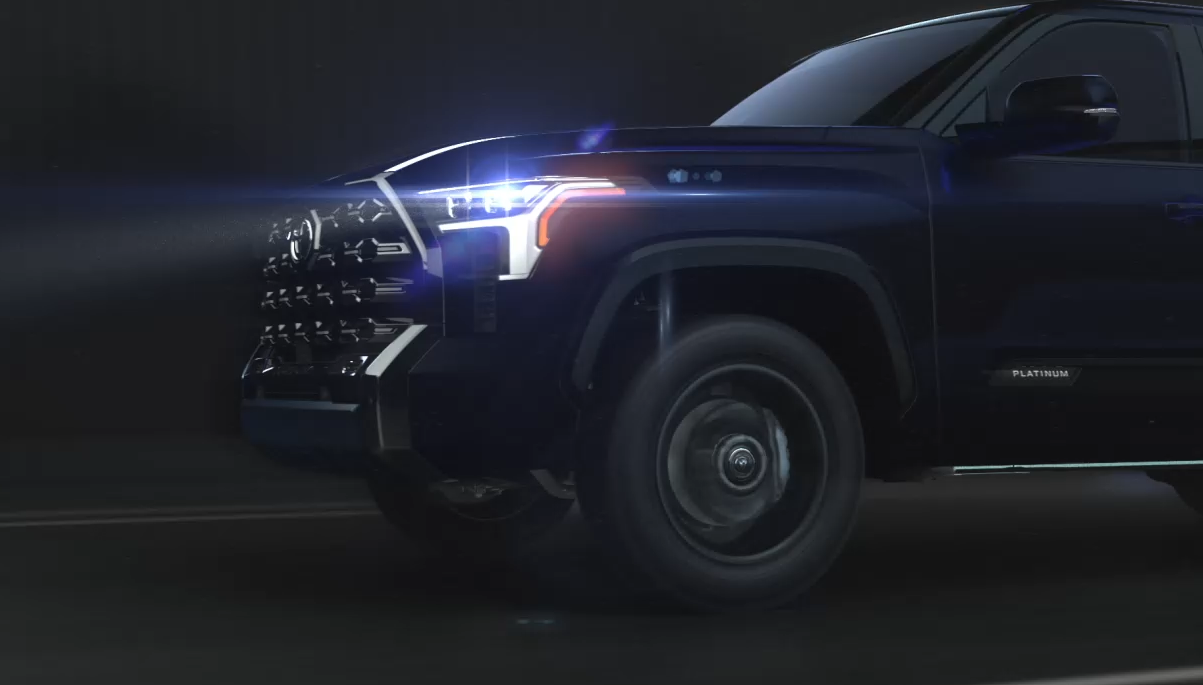
Blue 2026 Toyota Tundra Platinum

Choosing the Right 2026 Tundra for Big Jobs: Trim & Engine Breakdown

If you're shopping for a full-size truck in Palatine or anywhere across Chicagoland, towing capacity is probably the first spec you check. The 2026 Toyota Tundra tows anywhere from 8,300 lbs to 12,000 lbs, depending on trim, engine, and drivetrain. Below, we break down which configuration gets you which number. If you'd rather see these trucks in person, you can browse our new 2026 Tundra inventory in Palatine while you read. 2026 Toyota Tundra Towing Capacity at a Glance The 2026 Tundra's max towing capacity of 12,000 lbs belongs to a specific build: the SR5 Double Cab, 4x2 (RWD), 6.5-ft bed, equipped with the tow package. The base SR trim tops out at 8,300 lbs across every configuration it offers. Everything in between depends on how the engine, cab, bed, and drivetrain combine, which is exactly what we break down trim by trim below. How Towing Capacity Is Calculated: Payload, Tongue Weight & Powertrain Towing numbers don't come from one single spec. They're the product of several ratings working together, and mixing them up is where a lot of confusion happens. Your Tundra's payload covers everything the cab and bed can carry at once, passengers, cargo, gear, all of it. Max payload is 1,940 lbs on SR and SR5 Double Cab models with rear-wheel drive and the 6.5-ft bed. From there it falls as trims add weight, down to 1,600 lbs on TRD Pro and 1,485 lbs on Capstone. Hybrid models give up roughly 100 to 200 lbs of payload to the battery pack compared with their gas equivalents. Always confirm your specific truck's number on the door-jamb payload label before loading up. GVWR (Gross Vehicle Weight Rating) is the max total weight of the truck itself, fully loaded. GCWR (Gross Combined Weight Rating) adds the trailer into that equation, capping the combined weight of truck plus trailer plus everything inside both. Then there's tongue weight, the downward push your trailer's hitch exerts on the truck. It typically runs 10-15% of the trailer's total loaded weight. A 10,000-lb trailer carries roughly 1,000-1,500 lbs of tongue weight, and that weight comes directly out of your available payload. This is why a truck rated to tow 12,000 lbs can still feel maxed out if you're also hauling gear in the bed. A weight-distributing hitch (WDH) is required by Toyota for any trailer over 5,000 lbs, which helps spread that tongue weight more evenly across the axles. Toyota was the first manufacturer to voluntarily adopt the SAE J2807 towing standard, back in 2011, which includes the demanding Davis Dam Grade test. Every towing figure below reflects that standardized testing protocol, so numbers are directly comparable across Tundra trims. i-FORCE V6 vs. i-FORCE MAX Hybrid Towing Differences The standard i-FORCE 3.4L twin-turbo V6 makes 348 hp and 405 lb-ft of torque on SR, and 389 hp/479 lb-ft on SR5 through 1794 Edition, with EPA ratings up to 18/24 MPG city/highway. The i-FORCE MAX hybrid steps up to 437 hp and 583 lb-ft, about 48 hp and 104 lb-ft more than the gas V6, with fuel economy up to 20/24 MPG and 22 MPG combined in rear-wheel drive. More power doesn't automatically mean more towing, though. The hybrid system adds weight, and in several trims that extra mass actually lowers the max tow rating versus the gas-only equivalent. The hybrid's overall max towing figure sits at 11,450 lbs, below the gas V6's 12,000-lb ceiling on SR5. If you're chasing the absolute highest towing number, the gas V6 in the right configuration is still the way to get there. 2026 Toyota Tundra Towing Capacity by Trim Trailer-Sway Control is standard across the lineup, and every trim above the base SR adds an integrated trailer brake controller as standard equipment. Confirm hitch and wiring on the specific truck you're considering, since availability varies by trim. Below is how max towing and payload break down trim by trim. Trim Max Towing Max Payload Best-Tow Configuration SR 8,300 lbs 1,940 lbs Any SR5 12,000 lbs 1,940 lbs Double Cab, 6.5-ft, 4x2 Limited 11,450 lbs (hybrid) 1,860 lbs (gas) CrewMax, 5.5-ft, 4x2, hybrid Platinum 11,380 lbs (hybrid) 1,720 lbs (gas) CrewMax, 5.5-ft, 4x2, hybrid 1794 Edition 11,310 lbs (gas) 1,720 lbs (gas) CrewMax, 5.5-ft, 4x2, gas TRD Pro 11,175 lbs 1,600 lbs CrewMax, 5.5-ft, 4x4 Capstone 10,340 lbs 1,485 lbs CrewMax, 5.5-ft, 4x4 SR & SR5 Towing and Payload Specs SR is Tundra's work-focused entry point, capped at 8,300 lbs of towing regardless of cab or bed choice. Step up to SR5 and the ceiling jumps to 12,000 lbs when you spec a Double Cab, 6.5-ft bed, and rear-wheel drive. That same SR5 in 4x4 comes in at 11,200 lbs, and with the 8.1-ft bed it rates 11,370 lbs in RWD. SR and SR5 also share the lineup's highest payload at 1,940 lbs, so if maximum towing and payload together are your priority, SR5 in the right configuration is the trim to look at. Limited Towing and Payload Specs 2026 Tundra Limited towing capacity ranges from 11,110 lbs to 11,400 lbs with the gas V6, or up to 11,450 lbs with the i-FORCE MAX hybrid. Limited is one of the few trims where the hybrid actually edges out the gas engine on towing. Payload tops out at 1,860 lbs with the gas V6, or 1,680 lbs with the hybrid. Limited also brings added towing tech, including the Panoramic View Monitor on higher packages, which helps with trailer visibility that lower trims don't get. Platinum & 1794 Edition Towing and Payload Specs Platinum and 1794 Edition sit close together on paper. Platinum's gas V6 tows 10,890-11,310 lbs, with the hybrid running 10,960-11,380 lbs. 1794 Edition matches Platinum's hybrid range and tops out around 11,310 lbs with the gas V6, just under SR5's 12,000-lb ceiling, while adding more standard luxury features. On both trims the hybrid is the stronger tow choice, not the gas V6. Both share a 1,720-lb max payload with the gas engine, or 1,655 lbs with the hybrid. TRD Pro Towing and Payload Specs The 2026 Toyota Tundra TRD Pro towing capacity is 11,175 lbs, and this trim is hybrid-only; there's no gas V6 option here. Toyota Tundra 4x4 towing capacity on TRD Pro holds strong even with the off-road suspension and reinforced skid plates that come standard. Capstone Towing and Payload Specs Capstone is Tundra's top luxury trim, also hybrid-only, built exclusively on CrewMax 4x4 with the 5.5-ft bed. Max towing lands around 10,340 lbs, lower than several other trims, since Capstone is built around comfort and refinement rather than chasing towing records. It's meant for buyers who want the most refined cabin and technology package while still being able to tow a boat, trailer, or camper comfortably. Full Towing Capacity Chart by Cab, Bed Length & Drivetrain Cab and bed choice shift towing numbers even within the same trim. Double Cab comes with either a 6.5-ft or 8.1-ft bed, while CrewMax offers 5.5-ft or 6.5-ft beds. The 8.1-ft bed is only available on the lowest trims, and TRD Pro and Capstone are locked to the 5.5-ft bed only. Every bed shares the same 20.9-inch depth, 58.7-inch width, and 48.7 inches between wheelwells, with overall vehicle length ranging from 233 to 252 inches depending on configuration. Cab / Bed Gas 4x2 Gas 4x4 Hybrid 4x2 Hybrid 4x4 Double Cab, 6.5-ft 8,300–12,000 8,300–11,200 — — Double Cab, 8.1-ft 8,300–11,370 8,300–11,090 — — CrewMax, 5.5-ft 8,300–11,400 8,300–11,160 11,380–11,450 10,340–11,175 CrewMax, 6.5-ft 11,180–11,270 10,890–11,110 11,290–11,350 10,960–11,040 The i-FORCE MAX hybrid is not offered on Double Cab. Ranges span the trims available in each configuration. All figures per SAE J2807; confirm the rating on your specific build. Which 2026 Tundra Configuration Tows the Most? If you're wondering which Toyota Tundra has the highest towing capacity, it's the SR5 Double Cab, 6.5-ft bed, RWD, running the gas i-FORCE V6 with the tow package installed. That combination reaches Tundra's absolute max of 12,000 lbs. The 1794 Edition's gas V6 tops out around 11,310 lbs, just short of that number, while SR5 reaches the full 12,000-lb ceiling with less luxury equipment adding weight elsewhere in the lineup. You can explore current inventory through our new-vehicle search or talk to our team about financing a properly-equipped Tundra. Towing in Chicagoland: Job Site Trailers, Boats & Lake Michigan Adventures We see a lot of Tundra buyers in Palatine, Arlington Heights, Schaumburg, and Streamwood who need a truck that handles both job sites and weekends off. A typical bass boat and trailer combo runs 4,000-6,000 lbs, well within reach of nearly every Tundra trim, whether you're launching at 31st Street Harbor, North Point Marina in Winthrop Harbor, or Waukegan Harbor for a day on Lake Michigan. Mid-size travel trailers land in the 6,000-9,000-lb range, still comfortably handled by most Tundra configurations. Fifth-wheel campers, though, often weigh 12,000-15,000 lbs, and that upper end exceeds even the Tundra's max rating of 12,000 lbs, so double-check your specific camper's loaded weight before assuming any Tundra trim can handle it. How to Maximize Your Tundra's Towing Setup Getting the most out of your Tundra's tow rating comes down to more than the spec sheet. Every Tundra ships with Trailer-Sway Control standard, every trim except the base SR adds an Integrated Trailer Brake Controller as standard equipment, and Tow/Haul Mode adjusts shift points for better control under load. Trailer Backup Guide with Straight Path Assist makes reversing far less stressful; it's standard on Platinum, 1794, and Capstone, available on SR5 and Limited, and not offered on SR or TRD Pro. The Panoramic View Monitor is standard from Platinum up and available on SR5 and Limited. Beyond the tech, match your hitch class to your actual load, keep tongue weight in that 10-15% range, and always check the door-jamb payload label rather than relying on advertised max figures. A WDH is required by Toyota for trailers over 5,000 lbs, and it makes a real difference in handling. If financing a properly-equipped Tundra is part of your plan, our financing team can walk you through options. Frequently Asked Questions About Tundra Towing Capacity How Much Can a Toyota Tundra Tow? The 2026 Toyota Tundra towing capacity ranges from 8,300 lbs on the base SR trim up to 12,000 lbs on a properly configured SR5. The 1794 Edition tops out lower, around 11,310 lbs with the gas V6. Where your specific truck falls depends on trim, engine, cab, bed, and whether the tow package is installed. Does the Tundra Hybrid Tow More Than the Gas V6? In most trims, no. The i-FORCE MAX hybrid tops out at 11,450 lbs, below the gas V6's 12,000-lb max on SR5. The hybrid's extra weight offsets some of its added torque advantage, though on Limited specifically the hybrid does edge out the gas engine slightly. Explore the Full Toyota Truck Lineup at Arlington Toyota Tundra isn't the only capable truck we carry. If you want to compare towing figures, cab configurations, or fuel economy across the full range, explore our new Toyota truck inventory to see what's currently on our lot in Palatine. Schedule Your Tundra Test Drive or Value Your Trade-In Numbers on a spec sheet only tell part of the story. Come feel how a 12,000-lb-rated SR5 or a fully-loaded Capstone handles with a trailer attached, and bring your current truck along while you're here. We'll appraise it on the spot and show you exactly what it's worth toward your next Tundra, which is often more than owners expect. We're a family-owned dealership serving Chicagoland since 1983, and our team can help you match the right Tundra configuration to your actual towing needs, then walk you through your trade-in value and financing options. Contact us or give us a call at (844) 474-5287 to set up a test drive today.

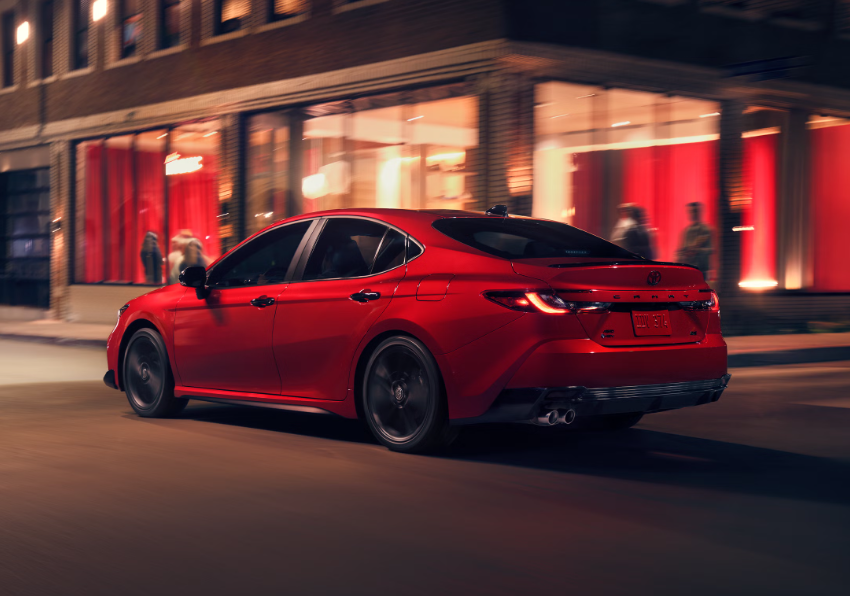
Red 2027 Toyota Camry

2027 Toyota Camry Preview: What's New & What's Changed

The 2027 Toyota Camry lands at an odd spot in its lifecycle. Toyota redesigned the car for 2025, dropping the gas-only option entirely and going hybrid across the board. Based on Toyota's typical redesign cadence, the 2027 model should carry that same design forward largely unchanged. If you're weighing a new Toyota Camry for sale in Palatine or just want to know what's coming before the next model year lands, here's what we know so far, and what's still speculation. You can also contact us directly with questions while we wait on official details. 2027 Toyota Camry: First Look at the Carryover Model Toyota usually runs on a multi-year redesign cycle, and the Camry's next full refresh isn't expected until the 2028 model year, probably hitting showrooms in late 2027. That puts the 2027 Camry in carryover territory. The hybrid-only powertrain, exterior styling, and tech package that debuted with the MY2025 redesign should all stick around. For Chicagoland shoppers who liked what Toyota did last time around, that's good news. The fuel economy numbers, safety ratings, and interior tech that made the current Camry a strong pick should stick around in 2027. Speculative facelift renderings have been floating around online, showing tweaked grilles or lighting elements. These are unofficial digital concepts made by outside artists, not confirmed changes from Toyota. Nothing has been announced regarding styling revisions for 2027. What's New (and What's Not) for 2027 Given the carryover framing, don't expect much new for the 2027 Camry. Toyota tends to save bigger updates, new trim packages, or feature additions for mid-cycle refreshes rather than the years right after a redesign. The trim lineup should stay the same: LE, SE, Nightshade, XLE, and XSE, all running on the hybrid-only setup that replaced the gas-only four-cylinder starting in MY2025. Exterior Styling and Technology Carryover The current design language should stick around for 2027: slim LED headlights and taillights paired with Toyota's distinctive hammerhead front fascia, plus an integrated rear spoiler on the sportier trims. Wheel sizes should stay at 16 inches on the LE, 18 inches on the SE and XLE, and 19 inches on the XSE. Interior tech should carry over largely intact as well: a 7-inch digital instrument cluster, an 8-inch touchscreen (bigger on upper trims), wireless charging, a Wi-Fi hotspot, satellite radio, wireless Apple CarPlay and Android Auto, five USB ports, Bluetooth, six speakers, and HD Radio. Toyota Safety Sense should stay standard across the lineup, and we'd expect the 2027 Camry to keep earning strong crash-test marks from NHTSA and IIHS, in line with recent model years. Expected Pricing Changes We don't have confirmed pricing for the 2027 Camry, and we're not going to pretend otherwise. Based on typical year-over-year adjustments, figure on a 1% to 3% bump over the current model, which starts at $29,600 with destination. A FWD XLE trim runs around $34,800 today, and we'd expect similar positioning next year. If you'd rather not wait and want to look at financing options now, our finance team can walk you through what's available. Standard Hybrid Powertrain: Specs and Performance Every 2027 Camry, regardless of trim, should come standard with the hybrid system introduced in the MY2025 redesign: a 2.5-liter four-cylinder engine paired with an electric assist motor, routed through a continuously variable transmission. There's no gas-only Camry anymore, and nothing suggests that's changing for 2027. FWD Power and Torque Ratings FWD models combine a 184-hp engine with a 134-hp electric motor for a net 225 hp, plus 163 lb-ft of torque. That torque shows up instantly thanks to the electric motor, which makes the Camry feel responsive off the line, useful when merging onto I-90 or crawling through stop-and-go traffic. AWD Power Ratings Toyota's Electronic On-Demand AWD system, added with the last redesign, pairs a roughly 40-hp rear electric motor with the standard hybrid system for up to 232 net combined hp. It's an on-demand setup, engaging automatically when the system detects wheel slip rather than running all the time. Independent testing by Car and Driver clocked the Camry XSE AWD at 6.8 seconds in the 0-60 mph run; Toyota does not publish an official 0-60 mph estimate. AWD wasn't widely available on the Camry before this redesign made it a lineup-wide option, so this remains one of the more notable additions to recent generations. Fuel Economy: Up to 51 MPG Combined Fuel economy is a strong point for the Camry Hybrid, and we'd expect the 2027 figures to closely match the current model year. The LE FWD trim leads the lineup at an EPA-estimated 53 city, 50 highway, and 51 combined MPG. LE AWD comes in at 50 combined. Further down the lineup, SE FWD is rated at 47 combined, Nightshade FWD at 45 combined, and XLE FWD at 46 combined, while the sportier XSE FWD sits at 44 combined. AWD versions of the SE, Nightshade, and XLE trims land at 46 combined, with the XSE AWD at 43 combined. The lithium-ion battery pack sits under the rear seats, which helps preserve trunk space at 15.1 cubic feet, plenty for a midsize sedan. And if you're wondering whether the Camry counts as a full-size car given how roomy the cabin feels, it doesn't. The EPA classifies it as a midsize sedan, though the interior room and trunk capacity punch above that label. Why the 2027 Camry Hybrid Is Ideal for Palatine and Chicagoland Drivers Living in Palatine means dealing with a particular mix of driving conditions: highway stretches on I-90, arterial traffic on Illinois Route 53, and local routes like U.S. Highways 12 and 14. The 2027 Camry Hybrid's powertrain suits exactly this kind of variety. Hybrid systems do their best work in stop-and-go conditions, where the electric motor handles low-speed driving and regenerative braking recaptures energy that would otherwise go to waste. With an average Palatine-to-Chicago commute clocking in around 41 minutes, much of it involving traffic signals, merges, and speed changes, the efficiency advantage of a hybrid adds up fast over a work week. For winter driving, the available Electronic On-Demand AWD gives Chicagoland drivers extra confidence on snow-covered roads without giving up much of that hybrid efficiency. Commuting Efficiency on Route 53 and Northwest Highway The intersection of Route 53 and Northwest Highway is a daily reality for plenty of Palatine commuters, and it's exactly the kind of stop-and-go environment where the Camry Hybrid's powertrain shines. IDOT's $189 million reconstruction project along IL-53 between I-90 and Lake Cook Road is largely on track to wrap up major work by the end of this year, with some remaining items continuing into spring 2027. By the time the 2027 Camry reaches our lot, drivers should be looking at a noticeably smoother corridor for their daily commute, which pairs well with a hybrid built for efficient, comfortable driving. 2027 Toyota Camry Release Timeline Toyota hasn't published an official 2027 Toyota Camry release date yet, and any timeline we share here is an estimate based on historical patterns, nothing more. Looking at prior rollout schedules, we'd expect the 2027 Camry to arrive around September or October 2026. That lines up with how Toyota has typically introduced new Camry model years in the past, though the automaker could shift this timing without notice. If you want to be among the first in Palatine to see the 2027 Camry in person, keeping an eye on our inventory and reaching out directly is the most reliable way to stay updated as we get closer to that window. Frequently Asked Questions About the 2027 Toyota Camry Is the 2027 Toyota Camry getting a redesign? No. The 2027 Camry is expected to carry over the hybrid-only design and technology introduced with the MY2025 redesign. A full redesign isn't anticipated until the 2028 model year. Will the 2027 Toyota Camry Hybrid come in AWD? Yes. Electronic On-Demand AWD is expected to remain available across the Camry lineup, adding a rear electric motor for up to 232 net combined hp when needed. What is the estimated 2027 Toyota Camry price? Official pricing hasn't been announced. Based on typical annual increases, we estimate a 1% to 3% rise over the current starting price of $29,600 with destination. What is the expected fuel economy for the 2027 Camry Hybrid? We expect figures to mirror the current model, topping out at an EPA-estimated 51 MPG combined on the LE FWD trim. Is the Toyota Camry a full-size car? No. The Camry is classified as a midsize sedan, though its cabin space and 15.1 cubic feet of trunk room offer generous room for a car in this class. When does the 2027 Toyota Camry release? No official date has been confirmed. Based on past release patterns, we estimate an arrival around September to October 2026. Reserve Your 2027 Toyota Camry at Arlington Toyota Explore Current Inventory and Get Updates We've been serving Palatine and the greater Chicagoland area since 1983, and we know the 2027 Camry Hybrid is going to be a popular choice for drivers who want good mileage without sacrificing sedan comfort. While we wait for official word on pricing and the exact release date, our team can keep you updated and help you explore new Toyota cars for sale in Palatine in the meantime, including current Camry inventory if you don't want to wait. Visit or Contact Our Team Our showroom at 2095 N Rand Rd is staffed with team members who speak Spanish, Polish, and Russian, and we're happy to answer questions about financing and trade-ins, or talk through what to expect from the 2027 lineup. Give us a call at (844) 474-5287 or contact us online to get on our list for availability and ordering updates as they become available.

Gray 2026 Toyota RAV4

2026 Toyota RAV4 AWD & Winter Capability Guide: Navigating Chicagoland Snow & Ice

When the temperature drops and the snow starts falling across Chicagoland, having a capable SUV isn't just a luxury - it's a necessity. The 2026 Toyota RAV4 lineup has made a massive shift by moving to an all-hybrid powertrain, which brings exciting changes to how this SUV handles slick roads and freezing temperatures. If you're commuting from Palatine or navigating icy streets in Arlington Heights and Schaumburg, the 2026 RAV4 offers the traction, safety, and cold-weather comfort to keep you confident all season long. To see what's currently on our lot, you can browse our new 2026 RAV4 lineup while you read through our winter capability guide below. Tackling Palatine Winters: How the 2026 RAV4 Handles Snow We typically see around 36 inches of snowfall each year in Palatine, with January highs hovering near a freezing 32°F. That kind of climate makes your drivetrain choice one of the most practical decisions you'll make when picking an SUV. Every AWD 2026 RAV4 hybrid ditches the traditional, heavy mechanical driveshaft in favor of a dedicated rear electric motor, known as the MGR, to power its Electronic On-Demand AWD. Because this system is electric, it can send torque to the rear wheels almost instantly the second it detects front-wheel slip on ice or slush. This system works alongside a new Electronically Controlled Brake System with regenerative braking, keeping the RAV4 firmly planted when roads turn slick. Additionally, all AWD trims include standard drive modes covering Sport, Eco, Normal, EV, Trail, and Snow. Activating "Snow Mode" alters the throttle response and traction control to prevent wheel-spin when pulling out of unplowed driveways or accelerating at icy intersections. Finding Your Cold-Weather Package: How the Trims Compare More than 6.4 million RAV4s have sold in the U.S., and Toyota has spent decades refining what drivers need in harsh weather. Depending on the grade, the 2.5L 4-cylinder hybrid setup produces 226 hp with front-wheel drive or 236 hp with all-wheel drive. Here is a breakdown of how the four most popular trims - LE, XLE Premium, XSE, and Limited - equip you for the winter months. 2026 RAV4 LE: The Capable Winter Commuter The LE trim is where most RAV4 shoppers start, delivering 236 hp when equipped with the optional AWD. For anyone focused on essential winter safety, the LE covers the basics perfectly. It features Multi-LED Headlights with Automatic High Beams to cut through dark, snowy evenings, and standard Toyota Safety Sense 4.0 to help monitor surrounding traffic when visibility drops. It's a value-packed starting point, though if winter driving is your top priority, we highly recommend making sure you specify the AWD option rather than the standard FWD. 2026 RAV4 XLE Premium: The Winter Convenience Upgrade Stepping up to the XLE Premium layers on genuine cold-weather comfort. Toyota fits this trim with SofTex-trimmed heated front seats and heated exterior mirrors to quickly melt away morning frost. Practical touches matter when the weather turns bad; a height-adjustable power liftgate with jam protection means you don't have to get your hands dirty opening a slush-covered trunk. Toyota also includes Front and Rear Parking Assist with Automatic Braking. When snowbanks make tight driveways and crowded parking lots hard to navigate, these sensors add an essential layer of confidence. 2026 RAV4 XSE: Sporty Traction and Visibility The 2026 RAV4 XSE takes the guesswork out of the drivetrain by making AWD standard. You get the sportier styling and 20-inch wheels paired with an EPA-estimated 43 mpg city and 37 mpg highway. Inside, standard heated front seats keep you warm, but the standout winter feature is the Panoramic View Monitor with 3D 360-degree overhead visibility. When snow accumulation obscures parking lines and curbs, this camera system makes navigating tight spots far less stressful. 2026 RAV4 Limited: The Ultimate Winter Fortress The RAV4 Limited tops the lineup, shifting its focus toward premium cold-weather luxury. Like the XSE, AWD comes standard. However, the Limited goes much further to keep passengers comfortable during Palatine's coldest mornings. Comfort features extend to heated and ventilated front seats, heated rear seats for your passengers, and an available heated leather-trimmed steering wheel - a genuinely vital feature when temperatures drop below zero. The exterior also gains integrated LED fog lights for white-out conditions, and the interior features a digital rearview mirror to give you a clear view of the road behind you even if your rear window is blocked by heavy snow. Trim-by-Trim Comparison: Winter Specs and Features Seeing the specs side by side makes the differences clearer. Here's how the LE, XLE Premium, XSE, and Limited stack up on the details that matter most for winter driving. Feature LE XLE Premium XSE Limited Drivetrain FWD or Opt. AWD FWD or Opt. AWD AWD Standard AWD Standard Cold-Weather Comfort Cloth seating Heated front seats, Heated mirrors Heated front seats Heated front & rear seats, Heated steering wheel Visibility & Safety Tech LED Headlights, TSS 4.0 TSS 4.0 + Parking Assist w/ Auto Braking TSS 4.0 + 360-degree monitor TSS 4.0, 360-degree monitor, LED Fog Lights Snow/Trail Drive Modes Included (with AWD) Included (with AWD) Standard Standard Find Your Winter-Ready 2026 RAV4 at Arlington Toyota Test Out the Tech in Person Reading specs online only gets you so far. Sitting in the cabin, feeling the heated SofTex seats, and testing the 360-degree camera tells you more than any spec sheet can. Our knowledgeable staff can walk you through how the Electronic On-Demand AWD works in person and answer questions specific to your daily Chicagoland commute. If you're also curious how the RAV4 compares to other AWD options in our range, feel free to explore our new Toyota SUVs while you're browsing. Schedule Your Test Drive Don't wait for the first big blizzard to upgrade your vehicle. Come browse our new 2026 RAV4 lineup at Toyota of Arlington, located at 2095 N Rand Rd in Palatine, or give our sales team a call at (844) 474-5287 to schedule a test drive today.

Submit Lead Form Phone Snippet Clicks to number on mobile website