

Blog / Toyota Trucks

Choosing the Right 2026 Tundra for Big Jobs: Trim & Engine Breakdown

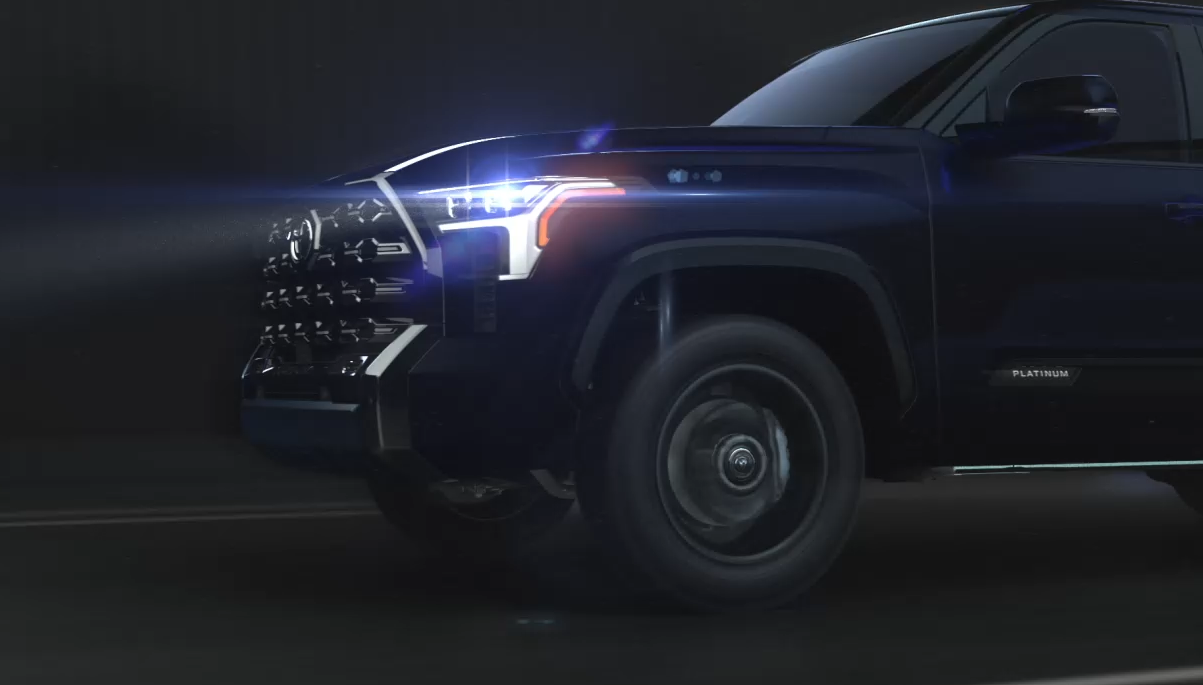
Blue 2026 Toyota Tundra Platinum

If you're shopping for a full-size truck in Palatine or anywhere across Chicagoland, towing capacity is probably the first spec you check. The 2026 Toyota Tundra tows anywhere from 8,300 lbs to 12,000 lbs, depending on trim, engine, and drivetrain. Below, we break down which configuration gets you which number. If you'd rather see these trucks in person, you can browse our new 2026 Tundra inventory in Palatine while you read.

2026 Toyota Tundra Towing Capacity at a Glance

The 2026 Tundra's max towing capacity of 12,000 lbs belongs to a specific build: the SR5 Double Cab, 4x2 (RWD), 6.5-ft bed, equipped with the tow package. The base SR trim tops out at 8,300 lbs across every configuration it offers. Everything in between depends on how the engine, cab, bed, and drivetrain combine, which is exactly what we break down trim by trim below.

How Towing Capacity Is Calculated: Payload, Tongue Weight & Powertrain

Towing numbers don't come from one single spec. They're the product of several ratings working together, and mixing them up is where a lot of confusion happens.

Your Tundra's payload covers everything the cab and bed can carry at once, passengers, cargo, gear, all of it. Max payload is 1,940 lbs on SR and SR5 Double Cab models with rear-wheel drive and the 6.5-ft bed. From there it falls as trims add weight, down to 1,600 lbs on TRD Pro and 1,485 lbs on Capstone. Hybrid models give up roughly 100 to 200 lbs of payload to the battery pack compared with their gas equivalents. Always confirm your specific truck's number on the door-jamb payload label before loading up.

GVWR (Gross Vehicle Weight Rating) is the max total weight of the truck itself, fully loaded. GCWR (Gross Combined Weight Rating) adds the trailer into that equation, capping the combined weight of truck plus trailer plus everything inside both.

Then there's tongue weight, the downward push your trailer's hitch exerts on the truck. It typically runs 10-15% of the trailer's total loaded weight. A 10,000-lb trailer carries roughly 1,000-1,500 lbs of tongue weight, and that weight comes directly out of your available payload. This is why a truck rated to tow 12,000 lbs can still feel maxed out if you're also hauling gear in the bed. A weight-distributing hitch (WDH) is required by Toyota for any trailer over 5,000 lbs, which helps spread that tongue weight more evenly across the axles.

Toyota was the first manufacturer to voluntarily adopt the SAE J2807 towing standard, back in 2011, which includes the demanding Davis Dam Grade test. Every towing figure below reflects that standardized testing protocol, so numbers are directly comparable across Tundra trims.

i-FORCE V6 vs. i-FORCE MAX Hybrid Towing Differences

The standard i-FORCE 3.4L twin-turbo V6 makes 348 hp and 405 lb-ft of torque on SR, and 389 hp/479 lb-ft on SR5 through 1794 Edition, with EPA ratings up to 18/24 MPG city/highway. The i-FORCE MAX hybrid steps up to 437 hp and 583 lb-ft, about 48 hp and 104 lb-ft more than the gas V6, with fuel economy up to 20/24 MPG and 22 MPG combined in rear-wheel drive.

More power doesn't automatically mean more towing, though. The hybrid system adds weight, and in several trims that extra mass actually lowers the max tow rating versus the gas-only equivalent. The hybrid's overall max towing figure sits at 11,450 lbs, below the gas V6's 12,000-lb ceiling on SR5. If you're chasing the absolute highest towing number, the gas V6 in the right configuration is still the way to get there.

2026 Toyota Tundra Towing Capacity by Trim

Trailer-Sway Control is standard across the lineup, and every trim above the base SR adds an integrated trailer brake controller as standard equipment. Confirm hitch and wiring on the specific truck you're considering, since availability varies by trim. Below is how max towing and payload break down trim by trim.

TrimMax TowingMax PayloadBest-Tow Configuration
SR8,300 lbs1,940 lbsAny
SR512,000 lbs1,940 lbsDouble Cab, 6.5-ft, 4x2
Limited11,450 lbs (hybrid)1,860 lbs (gas)CrewMax, 5.5-ft, 4x2, hybrid
Platinum11,380 lbs (hybrid)1,720 lbs (gas)CrewMax, 5.5-ft, 4x2, hybrid
1794 Edition11,310 lbs (gas)1,720 lbs (gas)CrewMax, 5.5-ft, 4x2, gas
TRD Pro11,175 lbs1,600 lbsCrewMax, 5.5-ft, 4x4
Capstone10,340 lbs1,485 lbsCrewMax, 5.5-ft, 4x4

SR & SR5 Towing and Payload Specs

SR is Tundra's work-focused entry point, capped at 8,300 lbs of towing regardless of cab or bed choice. Step up to SR5 and the ceiling jumps to 12,000 lbs when you spec a Double Cab, 6.5-ft bed, and rear-wheel drive. That same SR5 in 4x4 comes in at 11,200 lbs, and with the 8.1-ft bed it rates 11,370 lbs in RWD. SR and SR5 also share the lineup's highest payload at 1,940 lbs, so if maximum towing and payload together are your priority, SR5 in the right configuration is the trim to look at.

Limited Towing and Payload Specs

2026 Tundra Limited towing capacity ranges from 11,110 lbs to 11,400 lbs with the gas V6, or up to 11,450 lbs with the i-FORCE MAX hybrid. Limited is one of the few trims where the hybrid actually edges out the gas engine on towing. Payload tops out at 1,860 lbs with the gas V6, or 1,680 lbs with the hybrid. Limited also brings added towing tech, including the Panoramic View Monitor on higher packages, which helps with trailer visibility that lower trims don't get.

Platinum & 1794 Edition Towing and Payload Specs

Platinum and 1794 Edition sit close together on paper. Platinum's gas V6 tows 10,890-11,310 lbs, with the hybrid running 10,960-11,380 lbs. 1794 Edition matches Platinum's hybrid range and tops out around 11,310 lbs with the gas V6, just under SR5's 12,000-lb ceiling, while adding more standard luxury features. On both trims the hybrid is the stronger tow choice, not the gas V6. Both share a 1,720-lb max payload with the gas engine, or 1,655 lbs with the hybrid.

TRD Pro Towing and Payload Specs

The 2026 Toyota Tundra TRD Pro towing capacity is 11,175 lbs, and this trim is hybrid-only; there's no gas V6 option here. Toyota Tundra 4x4 towing capacity on TRD Pro holds strong even with the off-road suspension and reinforced skid plates that come standard.

Capstone Towing and Payload Specs

Capstone is Tundra's top luxury trim, also hybrid-only, built exclusively on CrewMax 4x4 with the 5.5-ft bed. Max towing lands around 10,340 lbs, lower than several other trims, since Capstone is built around comfort and refinement rather than chasing towing records. It's meant for buyers who want the most refined cabin and technology package while still being able to tow a boat, trailer, or camper comfortably.

Full Towing Capacity Chart by Cab, Bed Length & Drivetrain

Cab and bed choice shift towing numbers even within the same trim. Double Cab comes with either a 6.5-ft or 8.1-ft bed, while CrewMax offers 5.5-ft or 6.5-ft beds. The 8.1-ft bed is only available on the lowest trims, and TRD Pro and Capstone are locked to the 5.5-ft bed only. Every bed shares the same 20.9-inch depth, 58.7-inch width, and 48.7 inches between wheelwells, with overall vehicle length ranging from 233 to 252 inches depending on configuration.

Cab / BedGas 4x2Gas 4x4Hybrid 4x2Hybrid 4x4
Double Cab, 6.5-ft8,300–12,0008,300–11,200——
Double Cab, 8.1-ft8,300–11,3708,300–11,090——
CrewMax, 5.5-ft8,300–11,4008,300–11,16011,380–11,45010,340–11,175
CrewMax, 6.5-ft11,180–11,27010,890–11,11011,290–11,35010,960–11,040

The i-FORCE MAX hybrid is not offered on Double Cab. Ranges span the trims available in each configuration. All figures per SAE J2807; confirm the rating on your specific build.

Which 2026 Tundra Configuration Tows the Most?

If you're wondering which Toyota Tundra has the highest towing capacity, it's the SR5 Double Cab, 6.5-ft bed, RWD, running the gas i-FORCE V6 with the tow package installed. That combination reaches Tundra's absolute max of 12,000 lbs. The 1794 Edition's gas V6 tops out around 11,310 lbs, just short of that number, while SR5 reaches the full 12,000-lb ceiling with less luxury equipment adding weight elsewhere in the lineup. You can explore current inventory through our new-vehicle search or talk to our team about financing a properly-equipped Tundra.

Towing in Chicagoland: Job Site Trailers, Boats & Lake Michigan Adventures

We see a lot of Tundra buyers in Palatine, Arlington Heights, Schaumburg, and Streamwood who need a truck that handles both job sites and weekends off. A typical bass boat and trailer combo runs 4,000-6,000 lbs, well within reach of nearly every Tundra trim, whether you're launching at 31st Street Harbor, North Point Marina in Winthrop Harbor, or Waukegan Harbor for a day on Lake Michigan.

Mid-size travel trailers land in the 6,000-9,000-lb range, still comfortably handled by most Tundra configurations. Fifth-wheel campers, though, often weigh 12,000-15,000 lbs, and that upper end exceeds even the Tundra's max rating of 12,000 lbs, so double-check your specific camper's loaded weight before assuming any Tundra trim can handle it.

How to Maximize Your Tundra's Towing Setup

Getting the most out of your Tundra's tow rating comes down to more than the spec sheet. Every Tundra ships with Trailer-Sway Control standard, every trim except the base SR adds an Integrated Trailer Brake Controller as standard equipment, and Tow/Haul Mode adjusts shift points for better control under load.

Trailer Backup Guide with Straight Path Assist makes reversing far less stressful; it's standard on Platinum, 1794, and Capstone, available on SR5 and Limited, and not offered on SR or TRD Pro. The Panoramic View Monitor is standard from Platinum up and available on SR5 and Limited.

Beyond the tech, match your hitch class to your actual load, keep tongue weight in that 10-15% range, and always check the door-jamb payload label rather than relying on advertised max figures. A WDH is required by Toyota for trailers over 5,000 lbs, and it makes a real difference in handling. If financing a properly-equipped Tundra is part of your plan, our financing team can walk you through options.

Frequently Asked Questions About Tundra Towing Capacity

How Much Can a Toyota Tundra Tow?

The 2026 Toyota Tundra towing capacity ranges from 8,300 lbs on the base SR trim up to 12,000 lbs on a properly configured SR5. The 1794 Edition tops out lower, around 11,310 lbs with the gas V6. Where your specific truck falls depends on trim, engine, cab, bed, and whether the tow package is installed.

Does the Tundra Hybrid Tow More Than the Gas V6?

In most trims, no. The i-FORCE MAX hybrid tops out at 11,450 lbs, below the gas V6's 12,000-lb max on SR5. The hybrid's extra weight offsets some of its added torque advantage, though on Limited specifically the hybrid does edge out the gas engine slightly.

Explore the Full Toyota Truck Lineup at Arlington Toyota

Tundra isn't the only capable truck we carry. If you want to compare towing figures, cab configurations, or fuel economy across the full range, explore our new Toyota truck inventory to see what's currently on our lot in Palatine.

Schedule Your Tundra Test Drive or Value Your Trade-In

Numbers on a spec sheet only tell part of the story. Come feel how a 12,000-lb-rated SR5 or a fully-loaded Capstone handles with a trailer attached, and bring your current truck along while you're here. We'll appraise it on the spot and show you exactly what it's worth toward your next Tundra, which is often more than owners expect. We're a family-owned dealership serving Chicagoland since 1983, and our team can help you match the right Tundra configuration to your actual towing needs, then walk you through your trade-in value and financing options.

Contact us or give us a call at (844) 474-5287 to set up a test drive today.
Posted in:

Related Posts

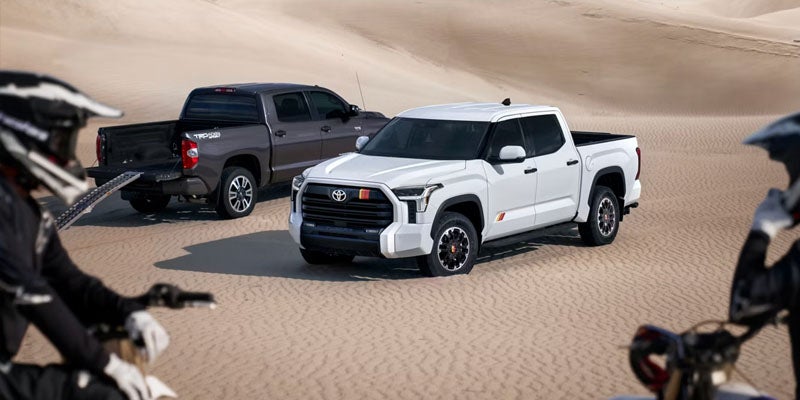
2026 Toyota Tundras parked in dunes

Best 2026 Toyota Trucks for Work, Towing, and Weekend Adventures

Whether you're hauling lumber across Palatine or towing a boat up to a Midwest lake, the 2026 Tacoma and Tundra lineups give you real options built around how you actually use a truck. If you're ready to see what's on our lot right now, you can browse our new Toyota truck inventory today. Built for Chicagoland: Toyota Work Trucks That Handle It All Landscaping crews, electricians, and weekend haulers keep demand for a dependable Toyota work truck steady around here. These trucks hold up through Chicago winters and job-site heat, with frames and beds that get configured around whatever the job calls for. That's the appeal of running the Tacoma and Tundra side by side: one covers agility and daily versatility, the other covers raw hauling muscle. 2026 Toyota Tacoma: The Versatile Midsize Powerhouse The Tacoma is the pick for buyers who need a compact truck that's still capable of real work. It threads the needle between maneuverability on tight Chicagoland streets and legitimate towing and payload numbers for job sites or weekend trailers. It's also become the go-to option for tradespeople who don't need full-size dimensions but still want serious capability. Tacoma Trim Lineup: SR to TRD Pro and Trailhunter The Tacoma spans eight grades, each aimed at a different kind of buyer. The SR sits at the work-focused entry point, and it comes with a tow hitch standard on the XtraCab configuration. SR5 builds on that by adding comfort and tech while keeping the SR's practical bones intact. TRD PreRunner brings off-road styling and stance without full 4x4 hardware, while TRD Sport swaps the traditional leaf springs for a coil-spring multi-link rear suspension that noticeably improves ride quality. TRD Off-Road is built for trail work, with Bilstein shocks, an available locking rear differential, and crawl control. Limited runs full-time 4WD with an electronic locking center differential with either engine, and both Limited i-FORCE and Limited i-FORCE MAX gain standard AVS. At the top end, TRD Pro is hybrid-exclusive and rides on FOX® shocks for serious off-road composure, and Trailhunter, also hybrid-only, gets tuned with Old Man Emu® shocks and RIGID Industries® fog lamps for overlanding-style use. Tacoma Cab, Bed, and Towing Capacity Bed and cab choices matter as much as power when you're loading tools every morning. The Double Cab is available with either a 5-foot or 6-foot bed, while the XtraCab comes exclusively with the 6-foot bed; you'll also see these referenced as a 60.3-inch short bed and 73.5-inch long bed, and the Trailhunter is also available with the 6-foot bed option. Toyota publishes towing ratings by configuration under the SAE J2807 standard: the SR is rated at 3,500 lbs, XtraCab models with the i-FORCE gas engine reach 6,500 lbs in either 4x2 or 4x4, Double Cab i-FORCE models reach 6,400 lbs, and i-FORCE MAX models are rated at 5,950 to 6,000 lbs. Payload runs up to 1,710 lbs on the i-FORCE MAX 4x4 Double Cab and up to 1,705 lbs on the i-FORCE 4x4 Double Cab, with the exact number depending on cab, bed, and equipment. Tacoma Engine Options and Fuel Economy The i-FORCE MAX hybrid brings 326 horsepower and 465 lb-ft of torque through an 8-speed automatic, with an EPA-estimated 23 MPG combined and 24 MPG combined on the Limited. That number matters if you're running a truck all week and watching fuel costs. Non-hybrid Tacoma trims run 228 horsepower and 243 lb-ft on the base SR, 278 horsepower and 317 lb-ft with the 8-speed automatic, or 270 horsepower and 310 lb-ft with the 6-speed manual, and those gas configurations carry EPA-estimated combined ratings of 20 to 23 MPG. 2026 Toyota Tundra: Heavy-Duty Muscle for Bigger Jobs When a job outgrows a midsize bed, the Tundra steps in as Toyota's full-size answer. Its towing and payload numbers cover the vast majority of contractor and trailer needs without stepping into heavier-duty territory. Tundra Trim Lineup: SR to Capstone Seven grades give Tundra buyers a wide spread between pure utility and full luxury. SR now comes with a standard tow hitch for 2026, a solid upgrade if you're buying for work first. SR5 broadens comfort and towing capability over that base SR, and Limited adds refinement while staying practical. Platinum stands out with dark-painted 20-inch wheels and elevated trim, and the 1794 Edition features American walnut wood-grain trim for a more upscale cabin. The i-FORCE MAX hybrid is available on all three of those grades, so Limited, Platinum, and 1794 buyers can pair hybrid power with the comfort and styling of the grade they already want. TRD Pro is equipped with FOX® shocks and BBS® wheels for off-road capability, and Capstone sits at the top as the flagship, with Shale Premium Textured leather-trimmed seats, 22-inch wheels, and a Head-Up Display. Tundra Engine Options: i-FORCE and i-FORCE MAX The base i-FORCE engine on the SR trim delivers 348 horsepower and 405 lb-ft. Move up to SR5 and above, and the enhanced i-FORCE engine jumps to 389 horsepower and 479 lb-ft. The i-FORCE MAX hybrid, available on the Limited, Platinum, and 1794 Edition trims and standard on TRD Pro and Capstone, produces up to 437 horsepower and 583 lb-ft. Tundra Towing Capacity and Payload Tow ratings track the engine. The SR is rated at 8,300 lbs, while SR5 and above reach up to 12,000 lbs on the 4x2 Double Cab with the 6.5-foot bed. The i-FORCE MAX hybrid tops out at 11,450 lbs on the Limited. Payload runs as high as 1,940 lbs on the 4x2 Double Cab with the 6.5-foot bed. You can browse our new Toyota truck inventory or explore used truck inventory to see what's currently on the lot. 2026 Tacoma vs. Tundra: Side-by-Side Specs Here's how the two trucks compare on the numbers that decide most purchases. Spec Tacoma Tundra Engine/Powertrain i-FORCE 228–278 hp gas (270 hp with 6-speed manual); i-FORCE MAX hybrid 326 hp/465 lb-ft i-FORCE 348 hp (SR), 389 hp (SR5 and above); i-FORCE MAX hybrid 437 hp/583 lb-ft Drivetrain 4x2, part-time 4x4, full-time 4x4 (Limited) 4x2, 4x4 Towing Capacity 3,500 lbs (SR); up to 6,500 lbs (XtraCab i-FORCE); 6,400 lbs (Double Cab i-FORCE); up to 6,000 lbs (i-FORCE MAX) Up to 12,000 lbs (SR5, 4x2 Double Cab, 6.5-ft bed); 8,300 lbs (SR); up to 11,450 lbs (i-FORCE MAX) Payload Capacity Up to 1,710 lbs (i-FORCE MAX 4x4 Double Cab) Up to 1,940 lbs (4x2 Double Cab, 6.5-ft bed) Bed Length Options 5-ft and 6-ft (Double Cab), 6-ft (XtraCab) 5.5-ft/6.5-ft (CrewMax), 6.5-ft/8.1-ft (Double Cab) Fuel Economy Up to 24 MPG combined (Limited i-FORCE MAX), 23 MPG combined (other i-FORCE MAX), 20–23 MPG combined (i-FORCE) Up to 22 MPG combined (4x2 i-FORCE MAX), 19–20 MPG combined (i-FORCE) Matching the Right Truck to Your Job Site or Job Description Having two distinct lineups means you can pick based on what your day actually looks like instead of settling for one-size-fits-all. Contractors, Tradespeople, and Fleet Work If you're running landscaping equipment, light tools, or making daily service calls, the Tacoma's size and payload usually cover it without the bulk of a full-size bed. Businesses juggling parking constraints and daily in-town driving tend to do well on the Tacoma platform. For heavier loads, longer trailers, or a crew that needs towing rated near 12,000 lbs, the Tundra SR5 is the more logical fit, since it carries the lineup's 12,000 lb maximum in 4x2 Double Cab form. Heavy Equipment and Trailer Hauling When you're moving skid steers, enclosed trailers, or construction materials regularly, the Tundra's towing range built into the table above makes it the stronger choice. The Tacoma still handles occasional trailer duty well, especially in i-FORCE MAX form, but for repeated heavy-equipment hauling, stepping up to Tundra reduces strain on the drivetrain and gives you more margin. Weekend Adventures: Towing Boats and Conquering Midwest Trails Work trucks that double as weekend vehicles are part of why so many Chicagoland families choose Toyota 4x4 trucks in the first place. Lake Trips and Boat Towing Around Chicagoland Whether you're pulling a boat to a nearby lake or hauling camping gear for a Midwest getaway, the Tacoma's towing range handles smaller boats and utility trailers, while the Tundra's higher capacity suits larger boats or multi-axle trailers. Either way, you're covered for a typical Chicagoland weekend without needing to rent or borrow a bigger rig. Off-Road Confidence in Winter and Rough Terrain Illinois winters test any vehicle, and Toyota 4x4 trucks are built with that in mind. TRD Off-Road and TRD Pro Tacoma trims bring available locking differentials, upgraded suspension, and crawl control, while the Tundra TRD Pro makes the electronically controlled locking rear differential, Multi-Terrain Select, and Crawl Control standard equipment for slick roads or rougher trails. If you're searching for winter capability specifically, these 4x4 options are worth a closer look. Why Arlington Toyota Is Chicagoland's Work Truck Headquarters We've been a family-owned, independently operated Toyota dealership in Palatine, IL since 1983, and that independence shapes how we sell trucks. Our multilingual staff can walk you through specs and financing in the language you're most comfortable with, and our Palatine location keeps us convenient for contractors and commuters across Chicagoland. We carry both new and used Toyota trucks for sale, so budget doesn't have to limit your options. Find Your 2026 Tacoma or Tundra at Arlington Toyota Whether you need a Toyota work truck for daily jobs or a weekend hauler for the lake, we can help you match the right Tacoma or Tundra to your needs. Start Browsing Today Browse our new Toyota truck inventory or explore used truck inventory to start comparing trims and configurations. Have questions before you visit? Reach our sales team at (844) 474-5287, Monday through Friday from 9:00 AM to 8:00 PM, or Saturday from 9:00 AM to 6:00 PM.

2026 Toyota Tundra vs. 2026 Ford F-150: Which Full-Size Truck Fits Your Needs?

Choosing a full-size truck is rarely simple. These vehicles haul your tools, your family, and on some job sites, your entire livelihood rides on the bed liner. The 2026 Toyota Tundra and the 2026 Ford F-150 both represent the best their respective brands have to offer, yet they take noticeably different approaches to getting the job done. If you're weighing the 2026 Toyota Tundra vs. 2026 Ford F-150 and want an honest breakdown of what actually matters for Chicagoland driving, here's the comparison. If the Tundra ends up fitting your needs, you can browse the 2026 Toyota Tundra for sale in Palatine once you've read through the details. 2026 Toyota Tundra vs. 2026 Ford F-150: Quick Comparison at a Glance The 2026 Toyota Tundra leads with bold styling, a refined hybrid powertrain, and a suspension system built for a smoother, more controlled ride. The 2026 Ford F-150 counters with a broader engine lineup, strong towing figures in specific trims, and a cabin full of practical work-focused features. Both trucks deliver modern technology and spacious interiors, but they prioritize performance, comfort, and efficiency differently enough that the differences matter. For drivers around Palatine and greater Chicagoland, where winters are brutal and job sites demand real capability, those differences show up directly in the daily driving experience, not just on a spec sheet. Powertrain Muscle: Twin-Turbo V6 and i-FORCE MAX Hybrid vs. Ford's EcoBoost Lineup The Tundra's standard i-FORCE powertrain is a 3.4-liter twin-turbo V6, producing 348 horsepower and 405 lb-ft of torque on the SR trim, with output rising to 389 horsepower and 479 lb-ft on higher trims. Torque is what you feel when pulling a loaded trailer up an on-ramp or hauling equipment over uneven terrain, and the Tundra delivers that force low in the RPM range for a quick response under load. For drivers who want both power and efficiency, the available i-FORCE MAX hybrid pairs that same twin-turbo V6 with an electric motor built into the transmission, producing a combined 437 horsepower and 583 lb-ft of torque, among the strongest outputs in the segment. The electric motor also delivers instant torque, useful in stop-and-go city driving or when pulling a heavy load off the line, and it comes backed by Toyota's 10-year/150,000-mile hybrid battery warranty. The F-150 offers more engine variety: a 2.7-liter EcoBoost V6, a 3.5-liter EcoBoost V6 (producing 382 horsepower and 500 lb-ft of torque for 2026), a 5.0-liter naturally aspirated V8, and the PowerBoost hybrid, which combines the 3.5-liter EcoBoost with an electric motor for 430 horsepower and up to 578 lb-ft of torque. Ford Motor Company's lineup also leans into towing capability. In specific trim configurations, the F-150 can tow up to 13,500 lbs, ahead of the Tundra's 12,000-lb maximum. That said, for buyers who don't need the absolute towing ceiling, the Tundra's torque consistency across trims and smoother ride under load make it the more confidence-inspiring choice for everyday hauling. Ride Quality and Suspension: Multi-Link Coil Springs vs. Ford's Leaf Springs The Tundra has a clear edge here for everyday driving. It uses a double-wishbone front and multi-link rear coil spring suspension setup. Coil springs generally absorb road imperfections more smoothly than leaf springs and hold better body control when the truck is loaded, which means noticeably better ride comfort on the highway and on pothole-covered Chicagoland streets alike. The F-150 uses a traditional solid rear axle with leaf springs. Leaf springs are proven and durable for high payload work, but they ride stiffer and can get bouncy when the truck is unloaded. If you spend most of your time driving without a full bed, you'll notice that stiffness. The Tundra's suspension makes it feel less like a dedicated work vehicle once you're off the job site, which matters if you're using your truck as your main daily driver. Built for Chicagoland: Job Sites, Winter Snowstorms, and Lake Michigan Towing Drivers around Palatine and the broader Chicago suburbs face demands not every truck buyer deals with. Winters bring snow and ice, plus enough road salt to eat through a lesser undercarriage. Summer weekends might mean hauling a boat to a Lake Michigan access point, and I-90 commuting adds its own daily wear. Contractors and tradespeople need a truck that handles a real workload without cutting corners. The Tundra's i-FORCE MAX hybrid system offers a real winter advantage. The electric motor sends full torque to the wheels the instant you touch the throttle, so there's less lag on slick surfaces compared to a traditional engine spooling up. The suspension helps too, keeping the rear end settled on uneven, icy roads. For towing along the lakefront or hauling to job sites along the North Shore, 583 lb-ft of torque handles the work with confidence. The F-150 remains a strong choice for contractors who need maximum payload capacity and towing headroom. Its ability to carry more weight in the bed, along with its wider range of cab and bed configurations, makes it a solid pick for professional use across different job types. Both trucks offer available four-wheel drive across multiple trims, which matters given Chicagoland winters. The decision comes down to whether you prioritize ride comfort and hybrid efficiency or maximum towing ceiling and engine variety. Technology, Safety, and Cabin Comfort Compared The 2026 Tundra features an available 14-inch touchscreen infotainment display with a clean interface, wireless Apple CarPlay and Android Auto, a premium JBL audio system on higher trims, Qi wireless charging, and available ventilated seats. Standard Toyota Safety Sense 2.5 includes pre-collision warning with pedestrian detection, lane departure alert with steering assist, full-speed dynamic radar cruise control, and lane tracing assist. The F-150 matches many of those features and adds a few work-specific extras that set it apart for job site buyers. Ford's integrated tailgate work surface, onboard power outlets capable of running tools, and the optional BlueCruise hands-free highway driving system add real value for the right buyer. Standard Ford Co-Pilot360 covers the core safety features frequent highway commuters expect. Cabin space is generous in both trucks, especially in the Tundra's CrewMax and the F-150's SuperCrew configurations. The Tundra's interior uses higher-quality materials at mid and upper trims, and the layout feels less cluttered. The F-150 counters with the SYNC 4 interface, known for quick, responsive controls, and available MAX Recline front seats for long-drive comfort. Torque, Screens, and Safety Tech at a Glance Feature 2026 Toyota Tundra 2026 Ford F-150 Max Torque 583 lb-ft (i-FORCE MAX) 570 lb-ft (PowerBoost hybrid) Infotainment Screen 14-inch (available) 12.0-inch (standard) Standard Safety Tech Toyota Safety Sense 2.5 Ford Co-Pilot360 Suspension Type Multi-link rear coil Traditional leaf springs Max Towing Capacity 12,000 lbs 13,500 lbs (specific trim) Hybrid Warranty 10-year/150,000-mile 8-year/100,000-mile The F-150 holds the edge in maximum towing capacity when configured in its top trims, which matters if you're regularly pulling near the top of a truck's rated limit. But for daily driving, the Tundra's torque comes on more consistently across trims, its coil-spring rear suspension delivers a smoother ride whether loaded or empty, and its hybrid powertrain carries a more comprehensive battery warranty. Which Truck Fits Your Needs? Buyer Recommendations There's no single winner here. What matters is matching the truck to what you'll actually use it for, and there are clear patterns in which buyer fits each one. Best for Towing and Job Site Demands If your priority is maximum towing capacity, high payload ratings, and the flexibility to configure your truck for specialized work, the F-150 has the edge. Its broader range of configurations, higher trim towing figures, and work-site features like onboard power make it a strong option for contractors, landscapers, and anyone who regularly pushes their truck toward its rated limits. Best for Winter Driving and Comfort For drivers who want a capable, comfortable truck that handles Chicagoland winters with confidence and doubles as a refined daily driver, the Tundra is the stronger pick. The i-FORCE MAX hybrid's instant electric torque helps on snow and ice, and the multi-link coil spring suspension keeps the ride smooth whether the bed is empty or loaded. Toyota Safety Sense 2.5 adds a layer of protection in conditions where visibility and reaction time get compromised. If you're covering highway miles across the suburbs, commuting on I-90, or towing to Lake Michigan on weekends, the Tundra fits that lifestyle well. Explore 2026 Toyota Tundra Offers at Arlington Toyota in Palatine Why Shop With Arlington Toyota If the Tundra sounds like the right fit, Arlington Toyota in Palatine is one of the best places in Chicagoland to explore your options. As a family-owned dealership serving drivers since 1983, we've built a reputation for straightforward pricing and a strong truck inventory, backed by a team that takes the time to match buyers with the right configuration for their lifestyle. Located at 2095 N Rand Rd in Palatine, we carry a wide selection of new 2026 Tundra models alongside certified pre-owned options backed by a 12-month/12,000-mile limited warranty and a 7-year/100,000-mile limited powertrain warranty. Ready to Take the Next Step? We offer flexible financing, leasing, and trade-in options to help you get into the right truck on terms that work for your budget. Browse our full lineup of new Toyota trucks in Palatine or reach our sales team at (844) 474-5287 to ask about current leasing offers. Sales hours run Monday through Friday from 9:00 AM to 8:00 PM and Saturday from 9:00 AM to 6:00 PM. Whether you're ready to test drive a Tundra today or just want to compare trim levels in person, our team is ready to help you make a confident, informed decision.

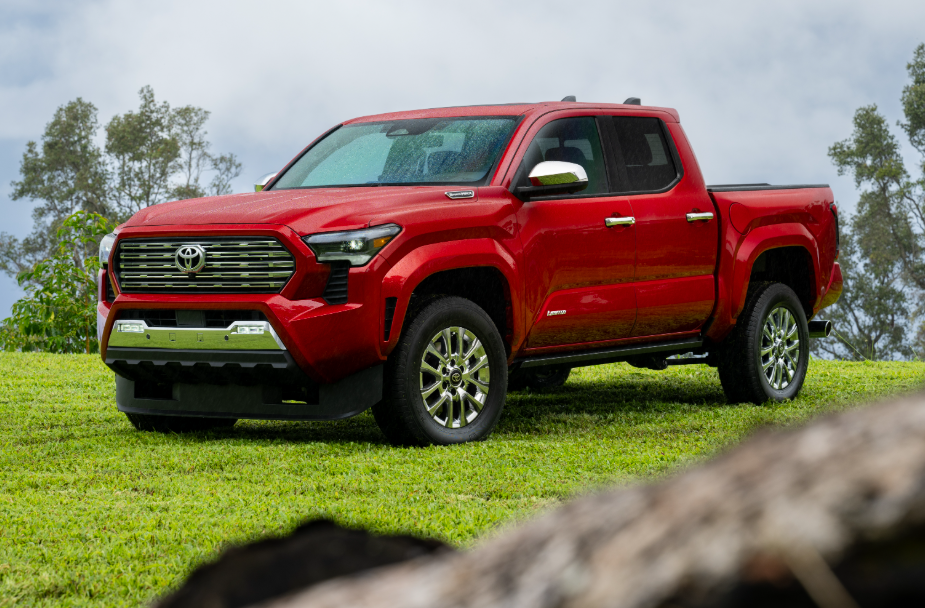
Red 2026 Toyota Tacoma parked in grass

2026 Toyota Tacoma TRD Off-Road vs. TRD Pro: Which Is Right for You?

Choosing between the Tacoma TRD Off-Road and the TRD Pro is one of the most common questions we hear from truck shoppers at Arlington Toyota. Both trims wear the TRD badge proudly, but they're built for different drivers with different priorities. The TRD Off-Road delivers impressive trail capability at a practical price point, while the TRD Pro packs factory hardware that rivals a lot of custom builds. If you're shopping for a 2026 Toyota Tacoma near Palatine, IL and want to know which trim earns your money, here's the breakdown. 2026 Tacoma TRD Off-Road vs. TRD Pro: Quick Comparison for Palatine Drivers The difference between these two trims comes down to performance ceiling and how you plan to use the truck. The Tacoma TRD Off-Road runs a 2.4L turbocharged i-FORCE engine paired with Bilstein® shocks, a locking rear differential (a system that locks both rear wheels together so they spin at the same speed for maximum traction in mud or snow), and serious all-terrain hardware. The TRD Pro steps things up with the standard i-FORCE MAX hybrid powertrain, FOX® internal bypass shocks, and a suspension setup tuned for higher-speed off-road driving. Both handle Midwest winters and gravel roads with confidence, but the TRD Pro is built for drivers who want the most the Tacoma platform can offer. Browse our 2026 Tacoma inventory near Palatine, IL and start narrowing down your fit. TRD Off-Road: Value-Packed Capability for Midwest Trails and Winters For most drivers in Chicagoland, the Tacoma TRD Off-Road hits a practical sweet spot. It brings genuine off-road credentials without pushing into premium truck territory. You get a capable truck that shrugs off snowy roads, plows through muddy forest preserves, and handles weekend camping runs with ease. Bilstein Shocks and Off-Road Hardware The TRD Off-Road comes standard with Bilstein® shocks, which offer noticeably better damping than the shocks on base trims. Toyota pairs those with an electronic locking rear differential, crawl control, multi-terrain select, and ATRAC active traction control. These are the same core systems that have helped the Tacoma build a loyal following among trail drivers for years. The all-terrain tires and 18-inch TRD wheels give the truck a purposeful stance that looks great on city streets while still handling loose terrain confidently. A TRD-stamped skid plate protects the underside on rocky trails, and the ground clearance is generous enough for the obstacles most Midwest drivers will realistically encounter. Everyday Versatility for Palatine Weather and Weekend Adventures The TRD Off-Road shines in how well it moves between daily driving and recreational use. Around Palatine, IL, that means handling winter slush without drama, gripping icy side streets, and still having enough left in reserve for a camping trip to the Kettle Moraine or a run through the Shawnee National Forest. The i-FORCE 2.4L turbocharged engine delivers strong torque for towing and hauling, so you're not giving anything up for daily use. This truck earns its keep every day of the week. TRD Pro: Ultimate Performance and Street Presence The TRD Pro is the top off-road Tacoma in the lineup, and it communicates that capability before you even turn the key. Everything on this trim is tuned for drivers who want more power, more suspension travel, and more confidence on challenging terrain. Standard 326-HP i-FORCE MAX Hybrid Powertrain Unlike the TRD Off-Road, the TRD Pro comes exclusively with the i-FORCE MAX hybrid powertrain. According to Toyota, this system combines a 2.4L turbocharged four-cylinder engine with an integrated electric motor to produce 326 hp and 465 lb-ft of torque. The electric motor fills in torque at low RPM, which is especially useful during slow, technical off-road maneuvers where precise throttle control matters. For everyday driving, the hybrid system also delivers better fuel economy than a traditional combustion-only setup, which matters when you're commuting through the suburbs daily. FOX Internal Bypass Shocks and Baja-Ready Chassis The TRD Pro's suspension is where it truly separates from the TRD Off-Road. Toyota fits it with 2.5-inch FOX® internal bypass shocks, which use a bypass tube design to let the shock move freely at low speeds while firming up under heavy impacts. This setup is derived from Baja desert racing technology and lets the truck absorb rough terrain at speed without the harsh, jarring feedback you'd expect. Toyota also adds TRD-tuned front springs that lift the front end slightly, improving approach angles and giving the truck its distinctive aggressive stance. Off-Road Tech and Capability Side-by-Side Both trims share a strong foundation of Toyota's proven off-road technology. Multi-terrain select, crawl control, ATRAC, and the electronic locking rear differential appear on both the TRD Off-Road and the TRD Pro. Neither truck is lacking the core features drivers need on the trail. Where they diverge is in the quality and capability of the components layered on top of that foundation, as shown below. Feature TRD Off-Road TRD Pro Engine 2.4L i-FORCE Turbo, 278 hp, 317 lb-ft 2.4L i-FORCE MAX Hybrid (standard), 326 hp, 465 lb-ft Shocks Bilstein® FOX® internal bypass Drive type Part-time 4WD Part-time 4WD Max towing 6,300 lbs 6,000 lbs (hybrid) Fuel economy 18/23 MPG 22/24 MPG (approx. 23 combined) The FOX shocks on the TRD Pro allow for noticeably more suspension travel than the Bilstein® units on the TRD Off-Road. In practical terms, the TRD Pro handles faster trail speeds and larger obstacles more comfortably. It also comes standard with 33-inch Goodyear Territory tires, giving it a taller contact patch and a more aggressive tread pattern right off the lot. The TRD Off-Road's setup is more than enough for most weekend trail drivers, while those who push their trucks hard on serious terrain will notice the extra margin of capability the Pro brings. Styling, Interior, and Pricing Differences On the outside, both trims have strong visual appeal, but the TRD Pro carries a more distinctive look. It comes in exclusive exterior colors not available on other trims, along with TRD Pro badging, a unique front grille treatment, and a more assertive overall presence. The TRD Off-Road looks athletic and purposeful but stays more restrained in its styling. Inside, the TRD Pro adds premium touches including TRD Pro branded seats, special stitching, and unique trim accents that mark it as the top-tier performance variant. Both trims come with Toyota's current infotainment system, but the TRD Pro's cabin feels more finished overall. The TRD Off-Road sits at a lower price point than the TRD Pro, which tracks with the difference in components and equipment. Buyers focused on value get an impressive return from the TRD Off-Road, while those chasing the top of the Tacoma lineup will find the TRD Pro justifies its premium. Which Tacoma TRD Trim Matches Your Driving Style? The honest answer depends on how and where you drive. Both trims are excellent. Matching the truck to your actual needs and budget is what really settles this decision. Choose TRD Off-Road If You Want Rugged Value A daily Chicagoland commute followed by an occasional forest-preserve trail run on the weekend is exactly what the Tacoma TRD Off-Road is built for. You get genuine off-road capability without paying for performance headroom you won't regularly use. The Bilstein® shocks, locking differential, and all-terrain package cover camping trips, hunting season, and snowy commutes without missing a beat, and you'll still drive one of the most capable mid-size trucks on the market. Choose TRD Pro If You Want Maximum Performance If your weekends call for aggressive off-road driving and you need serious capability on tougher terrain, the TRD Pro is the right call. It's the most performance-oriented factory Tacoma Toyota builds. If you run your truck hard on trails, prefer the i-FORCE MAX hybrid's power delivery, want FOX® suspension straight from the factory, or just want the flagship off-road trim, the TRD Pro delivers. It's also a strong long-term value since it holds resale well and turns heads in any configuration. It tends to move faster off dealer lots than the TRD Off-Road, so it's worth checking availability early if you've got your eye on one. Test Drive the 2026 Tacoma TRD Off-Road or TRD Pro at Arlington Toyota Arlington Toyota has been serving Palatine and the greater Chicagoland area since 1983 as a family-owned dealership with one of the largest Toyota inventories in the region. Our team knows Tacomas deeply, and inventory turns over at high volume, so it's worth exploring our full new Toyota truck lineup alongside the two TRD trims. Plan Your Visit You can reach our sales team at (844) 474-5287 during regular hours, Monday through Friday from 9:00 AM to 8:00 PM and Saturday from 9:00 AM to 6:00 PM. Once you own your Tacoma, our service department is available Monday through Friday from 6:00 AM to 7:00 PM and Saturday from 7:00 AM to 4:00 PM to keep it running at its best. Whether you're leaning toward the value-driven TRD Off-Road or ready to step into a TRD Pro, the best next step is a side-by-side test drive. Stop by 2095 N Rand Rd in Palatine, or get an online trade-in valuation before you visit so you know exactly where you stand on your next 2026 Toyota Tacoma near Palatine, IL.

Submit Lead Form Phone Snippet Clicks to number on mobile website